
147 Days in Slovakia, But Not Really Counting...
by Benjamin B. Olshin - Fulbright U.S. Scholar to Slovakia in 2026/2027, Slovak University of Technology.
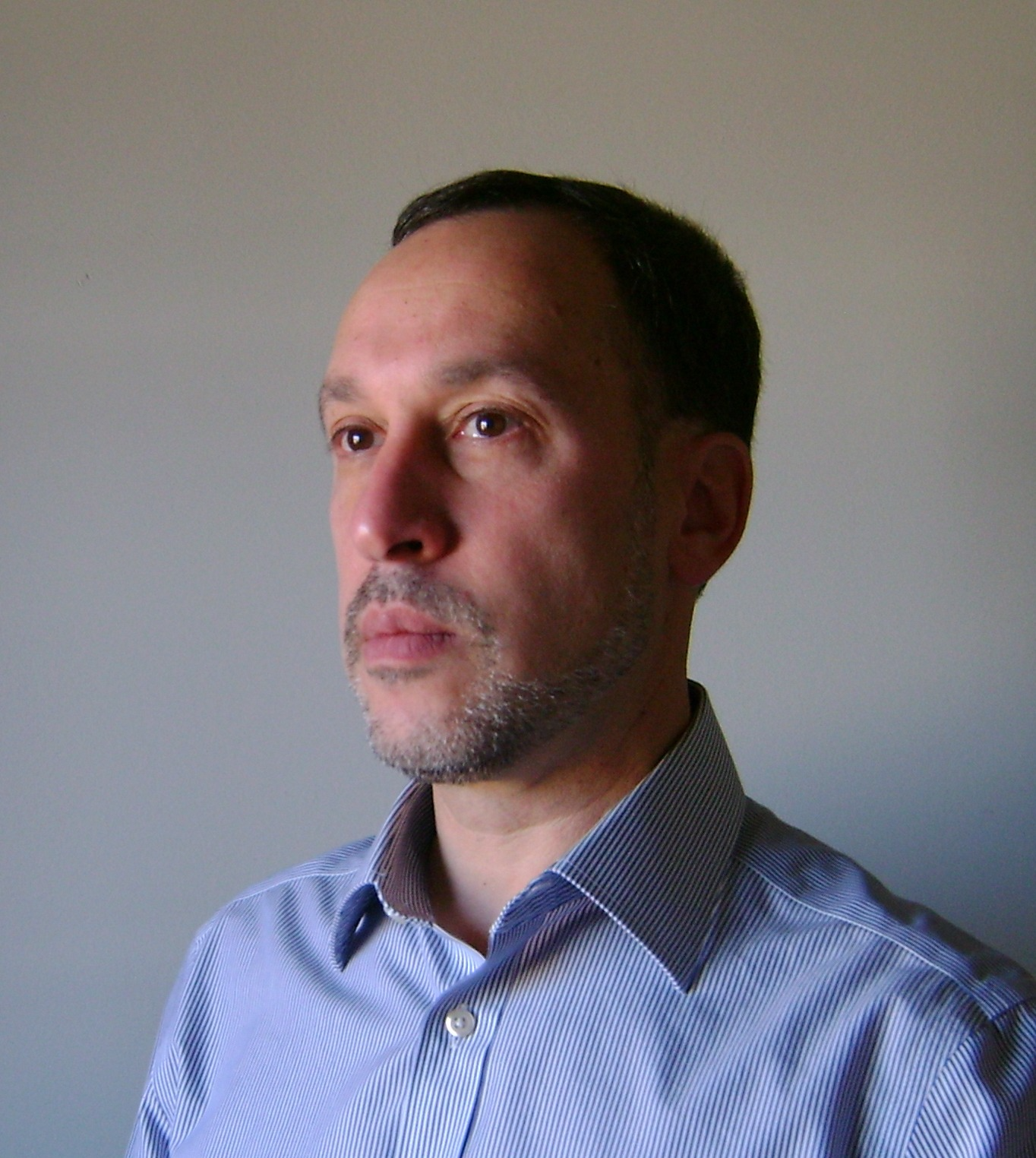
I was a Fulbright Scholar on a five-month grant in Slovakia — I gave some lectures in one of the design faculties at the Slovenská technická univerzita in Bratislava, and I also did research into craft traditions in Slovakia. I arrived in February of 2026, and my grant is coming to a close.
Why did I apply? Well, actually, I had done Fulbrights before, and found that they were great ways to learn, and to see the world... Way back in 1992, I had a Fulbright Scholar grant in Portugal: I spent eight months doing thesis research there on cartography and exploration. Almost three decades later, in 2021, I won a Fulbright Specialist award to teach a six-week seminar in political philosophy at the University of Iceland!
Of course, now the reader is likely confused as to what I actually do for a living: Cartography and exploration? Political philosophy? Design and crafts? Yes, I've had an odd career: I studied an obscure field called the "history and philosophy of science and technology", got a Ph.D., and wrote three books in that area. But my first job after graduate school was teaching fine arts and design. So, I've always had a parallel career in all of these subjects. Then, when I ended up teaching at an arts university, they asked me to teach philosophy, so really, I've had a three-track career! And I also like doing artwork, crafts, and music myself, as well, since just being "an academic" tends to bore people at parties...
When I applied for this Fulbright award in Slovakia, I was interested in doing something in the world of art and design, since I had already done scholarly work for many years (books, journal articles, lectures, and so on). The Fulbright Commission in the U.S. suggested Central Europe, particularly Slovakia: they noted that the country (and region) had a strong craft tradition, and good university programmes in design. Both of those things turned out to be true, but I also found that there is an incredible amount of art and design everywhere here: beautiful architecture in styles from Baroque to Secessionist to Brutalist, as well as painters and graphic designers who experimented in Cubism, Futurism, and other movements, and also invented their own styles. Alas, very little of this fantastic aesthetic history gets transmitted to the U.S. One has to come here to experience it.
And so, the Fulbright turned out to be 147 days of not just what I planned to do, but also many other experiences that happened by chance: a suggestion to go to a museum, a recommendation to meet with a particular craftsman, an invitation from a kindly Slovak to visit his hometown of Košice (which was wonderful). So, my days here ended up being filled with many great museums, encounters with a number of very talented craftsman working in a range of mediums, meetings with artists, and even an interview on the radio with a well-known expat (who is a big supporter of the arts, and was curious as to my impressions of life and culture here).
This is the way I've always felt travel should be, in fact: a bit of planning, and then a lot of providence. Slovakia is especially good for the latter, since people here (once you get the right moment) love to talk, are keen to show you what they are working on, and are very patient and thoughtful about it. Even as they sometimes downplay their own nation, they also display a subtle pride.
The providence played out easily, too, because I came with no assumptions. I had neither fears nor expectations, and was open to simply learning — admittedly, having travelled and lived in many others countries beforethis trip gave me the confidence to come here. But that didn't mean that there weren't challenges. The biggest challenge (beside the language!) is that in many ways the country is deceptively familiar, especially to an American, particularly if one has a bit of Central European or Eastern European background, as I do. Even the food — a lot of meat and a lot of starch! — was familiar. But this familiarity hides that fact that the culture is also not one's own culture. Even for a very well-travelled and rather "Europeanized" person such as me (I am only second-generation American, and I lived in Europe for several years when I was in my 20's), I encountered many cultural differences, but it took many weeks for the profundity of some of the differences to become clear. The differences included everything from local attitudes towards friends and family, to how young people in Slovakia engage in conversation.
In the end, as I spent my last week in Slovakia, the 147 days ended up as being an almost universally positive experience, but even more — a true learning experience, with exposure to many different aspects of the culture. But what struck me most or was the most lasting impression? I think it was when I ventured (at the strong prompting of my boss) out into the rest of Slovakia, beyond Bratislava. I really travelled, even as I wished I had seen even more — Banská Bystrica, Banska Štiavnica, Žilina, Martin, Poprad, and Košice, as well as the small towns of Hrušov, Motyčky, and Revúca. I met craftsmen and artisans, artists, art historians and many other people — everyone from a museum director, to a man working to preserve and promote a beautiful cultural centre. I also spoke to restaurant owners, a business owner specializing in the (very good) Slovak cheeses, people on the train, and hotel staff. It was the interaction with everyday people that struck me most, but also the fact that this small country had great wealth — so many crafts, in wood, and wire, and ceramics! And fine artists, from Martin Benka to Vladimír Kompánek, almost unknown in the U.S.! And the lovely landscape, with fields, hills, mountains, lakes, rivers, and even caves! And people who were very patient with foreigners, and very helpful...

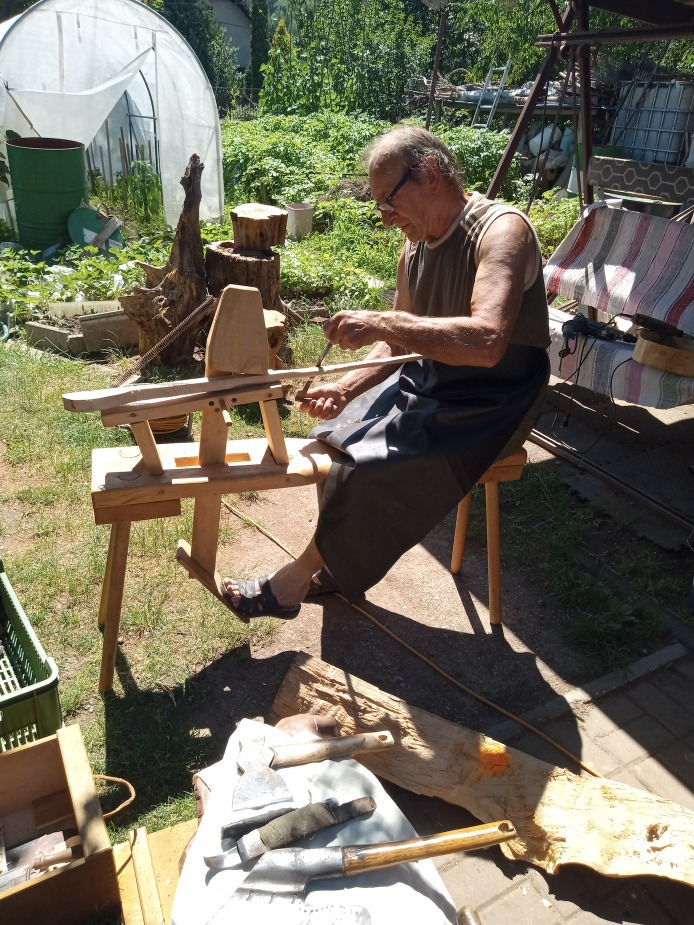
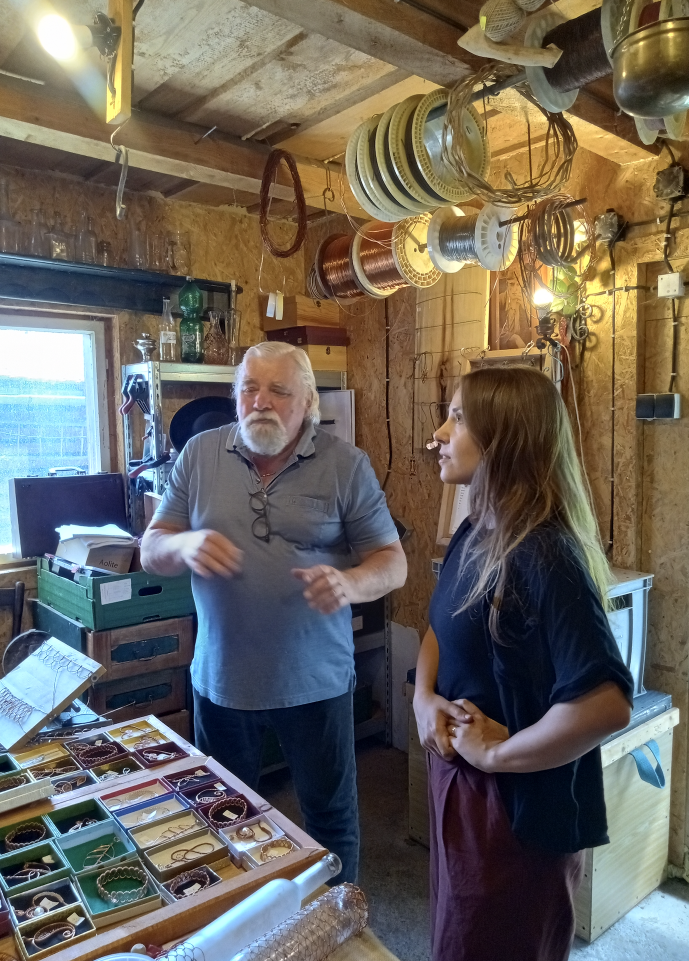
All this often was refined down — raffinated really is the proper word — to a perfect essence in individual Slovaks whom I met, particularly out in the small towns. Towards the end of my travels, I visited the home and workshop of Július Bútora, a retired lumberjack who now works as a drotár: an artisan who fabricates all kinds of objects with wire, carrying on a tradition at least two hundred years old. He showed us his work, and we had a wonderful lunch of bryndzový koláč, a traditional Slovak cheese pie, made by his wife. A day or so later, I met with a man named Ján Hudák, who had retired from his job as an electrician and had become interested in woodworking. He chose to use mostly hand-tools, as well as a particular antique type of work bench — of a type that I had actually seen a few weeks prior in the National Museum of Ethnography in Martin! — to make all kinds of utensils and art pieces.

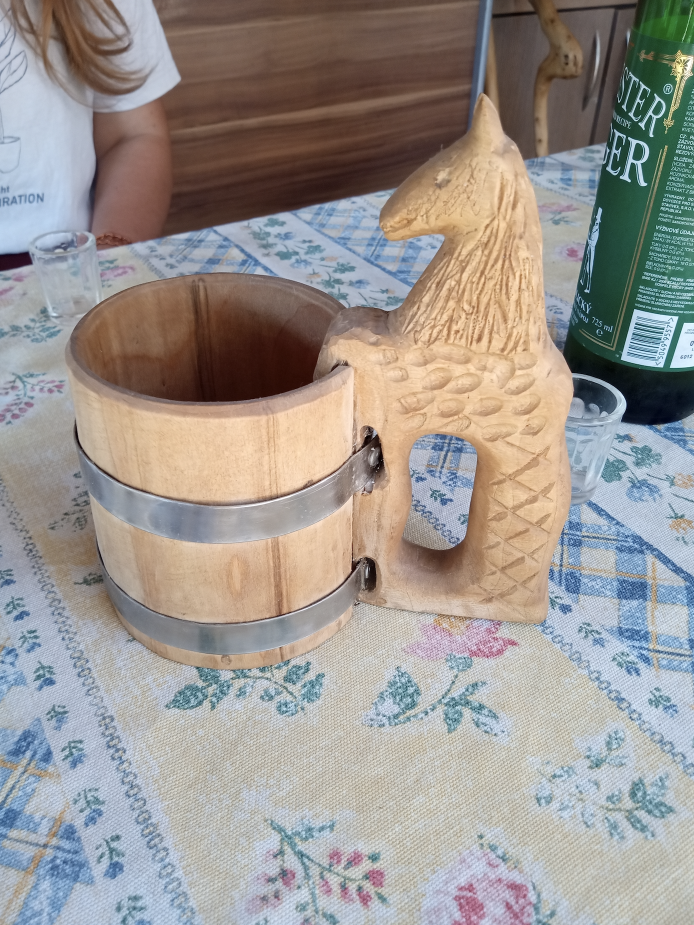
But it was the whole setting and interaction that made this such a memorable and iconic experience. A very kind woman from Revúca, Diana Jacková, who is trying support artisans and the arts in the Gemer region, had taken me to meet Mr. Bútora and Mr. Hudák. The woodworker's wife served us cheese, a bit of palenka, and even homemade žinčica — served in a črpák (a kind of traditional wooden cup) that the woodworker had created himself. He joked about this work, and even the scar or two he had earned on his arms from learning how to use the tools.
The atmosphere of patience, friendliness, and hospitality, along with a demonstration of tremendous craftsmanship, all set in the beautiful landscape, truly left a lasting impression.
Of course, I need to come back. 147days is not enough...
Disclaimer
The views expressed in this blog are those of the author and do not necessarily reflect the views of the Fulbright Program or the U.S. or Slovak government.